
- Details
- Written by: Sophie Nicholson
Mountaineering holidays are where walking ends and something bigger begins. Whether it’s your first time roping up in the Alps or a long-held ambition to stand on a high-altitude summit, there’s a whole world of epic mountains out there waiting to be climbed.
The beauty of mountaineering is that it isn’t just for elite climbers. From non-technical giants like Kilimanjaro and Aconcagua to classic alpine ascents like Mont Blanc and the Matterhorn, there are routes to suit a wide range of experience levels — as long as you’re prepared to put the work in.
From the high mountains of Europe to remote ranges in South America, Africa and Asia, these are some of the best mountaineering holidays around the world — whether you’re chasing your first summit or something a little more ambitious.

Mont Blanc, France

Climbing Mont Blanc is a classic first alpine objective and a rite of passage for many mountaineers. Rising above Chamonix – one of the world’s great mountain towns – it’s the highest peak in western Europe at 4,810m and offers a proper introduction to glacier travel, altitude and multi-day mountain missions.
Most guided trips include acclimatisation and skills training before the summit push, with routes typically taking place between July and September. The ascent itself is physically demanding rather than highly technical, but weather, altitude, rockfall and exposure all add to the challenge.
Mount Kilimanjaro, Tanzania

At 5,895m, Kilimanjaro is the highest peak in Africa and one of the most accessible high-altitude mountains in the world. While it’s often marketed as a trekking peak, that doesn’t make it easy – summit day is long, cold and physically demanding, with altitude the biggest hurdle for most climbers.
There are several routes to the top, ranging from five to nine days, with longer itineraries offering better acclimatisation and higher success rates. You won’t need technical climbing skills, but you will need stamina, determination and a decent tolerance for thin air.
Mount Aconcagua, Argentina

At 6,962m, Aconcagua is the highest mountain outside Asia and one of the world’s great high-altitude challenges. The Normal Route is often described as a trek rather than a climb, making it an appealing option for strong hillwalkers looking to step into expedition-style mountaineering.
That said, altitude is a serious factor here. Long days, harsh weather and thin air make this a much bigger undertaking than it might first appear. For those with more experience, the Polish Glacier route offers a more technical and committing ascent.
Matterhorn, Switzerland

One of the most recognisable mountains on the planet, the Matterhorn is as iconic as it is demanding. The Hörnli Ridge is considered a classic alpine route, but this is not a beginner’s climb - you’ll need solid scrambling ability, exposure tolerance and previous experience on alpine routes graded PD+ or above.
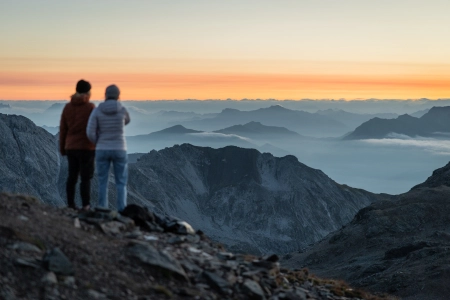
Summit day is long and committing, typically taking 9–12 hours with sustained movement and minimal rest. The rewards, however, are immense: a sharp, aesthetic summit and one of the most memorable ascents in the Alps.
MT. Cotopaxi, Ecuador

Cotopaxi is one of the world’s highest active volcanoes and a brilliant introduction to glacier mountaineering. At 5,897m, it combines altitude, snow and ice travel with a relatively short summit push, making it a popular objective for those stepping up from trekking peaks.
Climbs typically begin in the early hours, with headtorches cutting across glaciated slopes before sunrise. Crampons, ice axe skills and a qualified guide are essential, but the route itself is straightforward by mountaineering standards – the main challenge is coping with altitude and fatigue.
Island Peak, Nepal

Island Peak (6,189m) is one of the most popular introductory mountaineering objectives in the Himalayas, offering a step up from trekking into more technical terrain. Often combined with an Everest Base Camp approach, it’s a natural progression for those looking to build skills at altitude.
The climb involves glacier travel, fixed ropes and a short but exposed summit ridge, making it a proper mountaineering experience without being overly technical. With the backdrop of Lhotse, Ama Dablam and Everest itself, it’s also one of the most spectacular climbs anywhere in the world.
Toubkal, Morocco

At 4,167m, Toubkal is North Africa’s highest peak and a great introduction to high-altitude trekking. While it’s technically a walk rather than a climb in summer conditions, the altitude and sustained ascent still make it a solid challenge.
Most itineraries involve an overnight stay at one of the refuges before an early morning summit push. It’s a straightforward route with a clear path, making it accessible for fit walkers, though winter ascents require crampons and ice axe.
Mount Khuiten, Mongolia

Remote, wild and rarely visited, Mount Khuiten (4,374m) sits in the Altai Tavan Bogd range on the border of Mongolia, China and Russia. This is expedition-style mountaineering in a truly off-the-beaten-track setting.
The climb itself involves glacier travel and straightforward technical terrain, but the real appeal lies in the sense of isolation. Expect vast landscapes, minimal infrastructure and a journey that feels far removed from more established mountaineering hotspots.
Mount Siguniang (Er Feng), China

Often referred to as the “Oriental Alps”, the Siguniangshan range offers dramatic alpine scenery without the crowds of Europe’s classic peaks. Er Feng (5,276m) is one of the more accessible summits and a good introduction to mountaineering at altitude.
The route involves trekking, some steep scrambling and high-altitude effort, but remains achievable for fit walkers with some experience. The reward is a panoramic view across jagged peaks and deep valleys in one of China’s most beautiful mountain regions.